Understand &
be understood.
Quantum Salon is a communications studio helping quantum companies and organizations explain what they do and why it matters.
Clients come to us when communicating well requires technical depth in quantum science and a deep understanding of the quantum ecosystem.
Some come to us with a specific project. Others come with a problem they want to talk through or a need for ongoing support.
Examples of our work.
Academic research narrative
A client wanted a clear way to show how the different parts of their quantum research fit together. We worked with them, trying and discarding several ideas before developing a narrative that was accurate and compelling. It now shapes how they communicate their work.
New-user experience of a quantum-software product
We worked through a quantum-software product as a new user and documented the experience in real time. The resulting account showed how the instructions, concepts, and workflow appeared to someone encountering them for the first time.
Research-paper editing
We helped edit a quantum-software research paper, strengthening its framing, writing, and figures.
Research communication for different audiences
We helped a client explain the same body of research to several different audiences. We worked out what each group needed to understand, then used that structure across the client's website and supporting material.
Technical founder interviews and content series
We planned and conducted extended interviews with quantum-software founders, then selected the strongest parts of the conversations and developed them into short videos and written posts.

Fault-tolerance article series
We wrote articles on quantum-error-correction software, logical qubits, surface-code diagrams, error models, physical-qubit requirements, and hardware-specific fault tolerance. The series gave the company a clear, technically grounded way to explain its work.
QEC-software briefs for different audiences
We wrote two briefs about the same quantum-error-correction software: one for readers deciding whether it was relevant to their work, and one for readers who wanted to understand how it worked.
Communication foundations review
We read everything a quantum company had written about itself, from its website and pitch to its brand and audience material, and gave them an outside view of how it came across and what to prioritise.
Academic website rebuild
We rebuilt an academic client's website. We reorganised the content around the needs of different readers and moved it to a system the client could update themselves.

Private gathering during a quantum conference
We saw an opportunity to bring people together during a specialist conference, proposed it to the client, and designed the event around it. We helped shape the format, source the venue, and run invitations and registration. It was planned for 30 people and more than 50 came.
Technical webinar series
We proposed a technical webinar series for a quantum company and developed the first event. We planned the programme, moderated the discussion, and adapted the recording into further material.
Homepage for a research-impact service
We wrote the homepage for a research-impact service. The main challenge was explaining the same service to the people who would use it and the people who would decide whether to adopt it.
Quantum-software messaging brief
We developed a messaging brief for a quantum software platform, defining its audiences, core messages, differentiators, proof points, and the sequence in which those audiences would be addressed.
AI collaboration workshop for quantum researchers
We developed and ran a presentation and workshop for a quantum research group on using AI in collaborative work. We gave the group a framework for coordinating work with AI and with one another.
Sales document for a quantum-computing pilot
We developed a concise sales document for a quantum-computing pilot, clarifying the offer, its value, and the outcomes prospective customers could expect.
Quantum-software product pages
We wrote product pages for a company's quantum software on its website. The work involved deciding how to explain what the software did, how much technical detail different readers needed, and what each reader needed to see next.
About Aggie
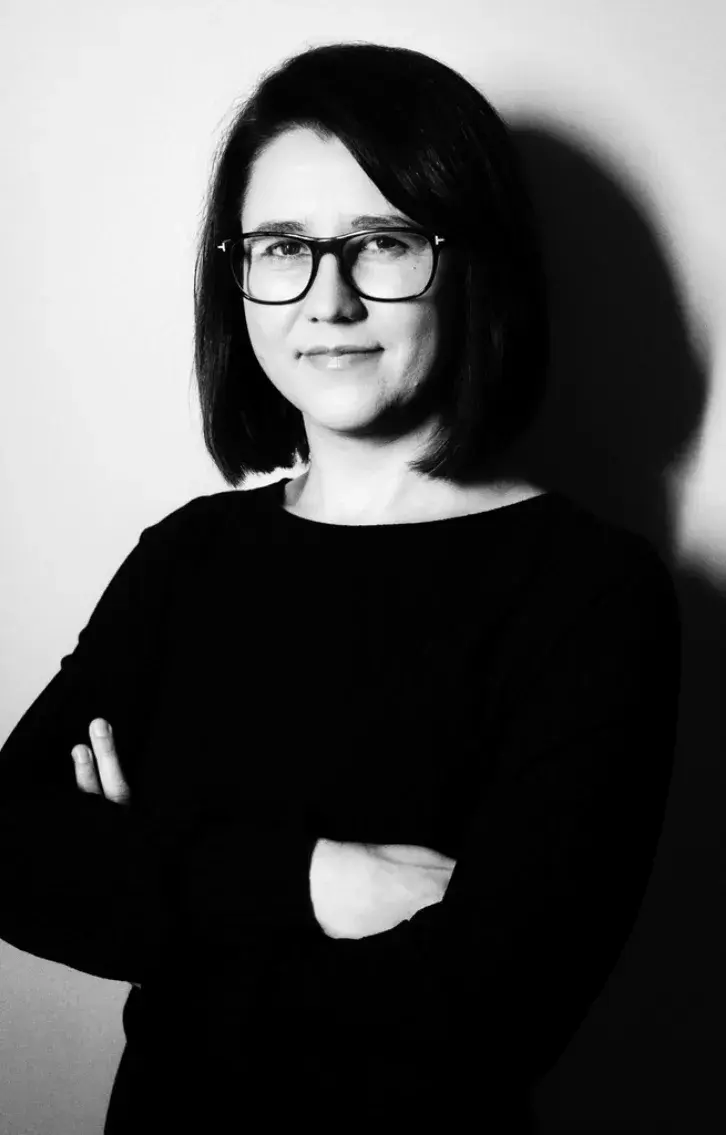
Aggie Branczyk is a physicist and communications strategist. She completed her PhD at the University of Queensland, held a postdoctoral position at the University of Toronto, and spent seven years at Perimeter Institute, where she taught quantum theory and led research in quantum optics. She later worked at IBM Quantum in technical and leadership roles.
Across those settings, her work repeatedly involved translating between communities: theory and experiment, research and software, academia and industry. She founded Quantum Salon to bring that combination of technical depth and communication judgment to people working across the quantum ecosystem.
Work with Quantum Salon
If you have a communication challenge that depends on understanding quantum science and the quantum ecosystem, get in touch.